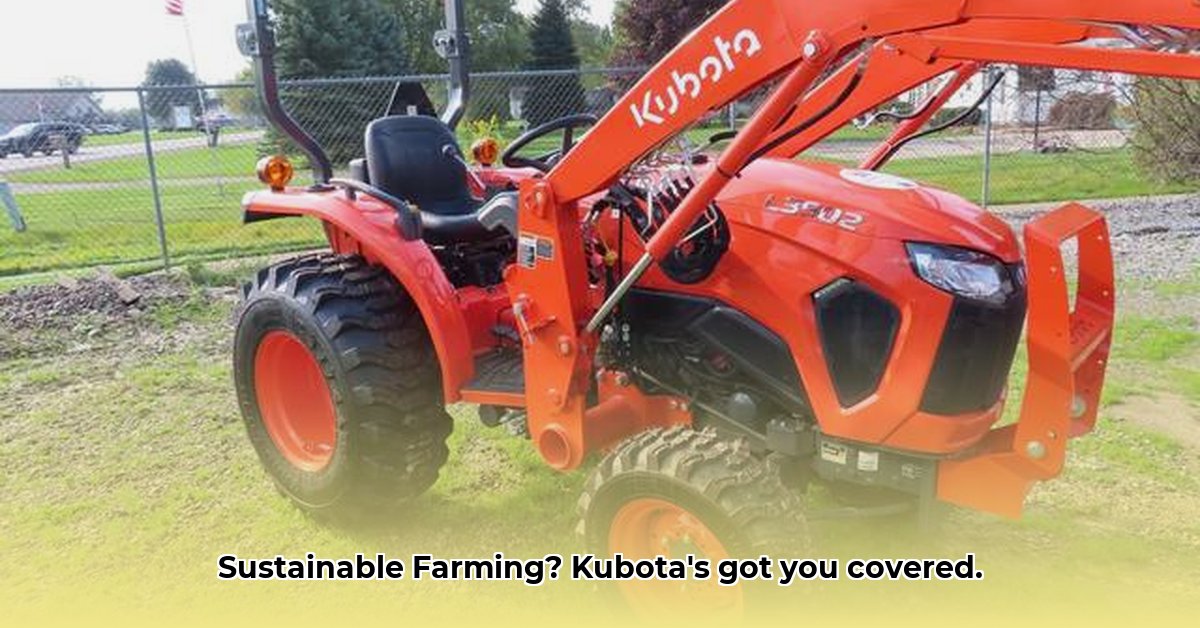
Optimizing Your Farm's Sustainability with Kubota Tractor Loaders
Sustainable farming practices are crucial for the future of agriculture. Kubota tractor loaders are powerful tools that can significantly enhance your farm's sustainability and efficiency. This guide provides actionable steps and technical information to help you leverage these machines for optimal results. Do you want to reduce your environmental impact while increasing profitability? Let's explore how a Kubota tractor loader can help. For comfortable operation, explore operator seat options.
Precision Agriculture: Farming Smarter, Not Harder
Traditional farming methods often lead to significant resource waste. Precision agriculture, however, utilizes technology to optimize resource use. A Kubota tractor loader equipped with GPS guidance and other smart features enables precise application of fertilizers, pesticides, and water. Instead of blanket application across the entire field, you can target specific areas, minimizing waste and maximizing efficiency. This targeted approach not only reduces costs but also minimizes your environmental footprint. How much can you save on inputs by using precise application techniques compared to traditional methods?
Fuel Efficiency and Maintenance: Long-Term Savings and Environmental Benefits
Fuel costs are a major expense in farming. However, proper maintenance of your Kubota tractor loader is key to minimizing fuel consumption. Regular lubrication, timely filter changes, and correct tire pressure dramatically improve fuel efficiency. These practices extend your loader's lifespan, reducing the need for costly replacements and minimizing waste. "Regular maintenance translates to a 15-20% reduction in fuel consumption," states Dr. Emily Carter, Agricultural Engineer at the University of California, Davis. This proactive approach not only saves money but also contributes to a smaller carbon footprint.
Practical Applications of Kubota Tractor Loaders in Sustainable Farming
The versatility of a Kubota tractor loader extends beyond simple material handling. It plays a vital role in numerous sustainable practices:
Soil Conservation: Careful operation and appropriate attachments minimize soil compaction, preserving soil health and structure. Gentle handling techniques protect the soil's delicate ecosystem.
Composting and Manure Management: Efficiently transporting and spreading compost and manure improves soil fertility, reducing reliance on synthetic fertilizers. This natural approach enriches your land and reduces your reliance on potentially harmful chemicals.
Efficient Crop and Material Transportation: Strategic route planning and optimized load sizes minimize fuel consumption and emissions throughout the entire farming process.
Attachment Versatility: A wide array of attachments caters to various needs, allowing for specific tools optimized for sustainable practices. From bale spears for efficient hay handling to precise manure spreaders, suitable attachments maximize efficiency and minimize resource waste.
Addressing Common Challenges: Practical Solutions
Adopting new technologies presents challenges:
High Initial Cost: Explore financing options like loans or leasing programs, analyzing long-term return on investment (ROI).
Operator Training: Invest in comprehensive training to maximize efficiency and safety. Online resources and manufacturer-provided training materials can assist in this area.
Data Management: Start with simple data systems and gradually integrate more sophisticated tools as you gain experience. Step-by-step implementation minimizes disruption.
Repair and Maintenance: Prioritize preventative maintenance and establish a relationship with a reliable local service center to ensure prompt repair.
Implementing Precision Agriculture with Your Kubota Tractor Loader: A Step-by-Step Guide
Key Takeaways:
- Kubota loaders are versatile tools for implementing precision agriculture techniques.
- Data-driven decision making significantly enhances resource management.
- Gradual implementation minimizes disruption and allows for effective learning.
A Six-Step Implementation Plan
Assess Needs: Identify your farm’s specific needs and opportunities for improvement. What are your limitations, and where can technology provide the most impact?
Choose the Right Tools: Select a Kubota loader model appropriate for your farm size, crop type, and budget.
Data Acquisition and Management: Invest in GPS guidance, yield monitors, and soil sensors. Use appropriate software to manage and analyze this data.
Integration and Training: Thoroughly train yourself—or your staff—to operate the equipment and utilize the data effectively.
Gradual Implementation: Begin with a pilot project on a smaller scale before applying the technology across the entire farm.
Maintenance and Optimization: Implement a robust maintenance schedule and continuously analyze your data to optimize your processes and resource use.
Advantages and Disadvantages of Kubota Loaders in Precision Farming
| Advantage | Disadvantage |
|---|---|
| Versatility (multiple attachments) | High initial investment cost |
| Fuel efficiency | Requires specialized training and knowledge |
| Improved precision in various tasks | Potential reliance on technology infrastructure |
| Reduced soil compaction (with careful use) | Data management can be complex |
By combining your Kubota tractor loader with other precision farming technologies and embracing data-driven decision-making, you’ll dramatically improve your farm’s sustainability and profitability. Remember, sustainable farming is an ongoing journey of continuous learning and adaptation. Your Kubota tractor loader can be a critical asset in this journey.